

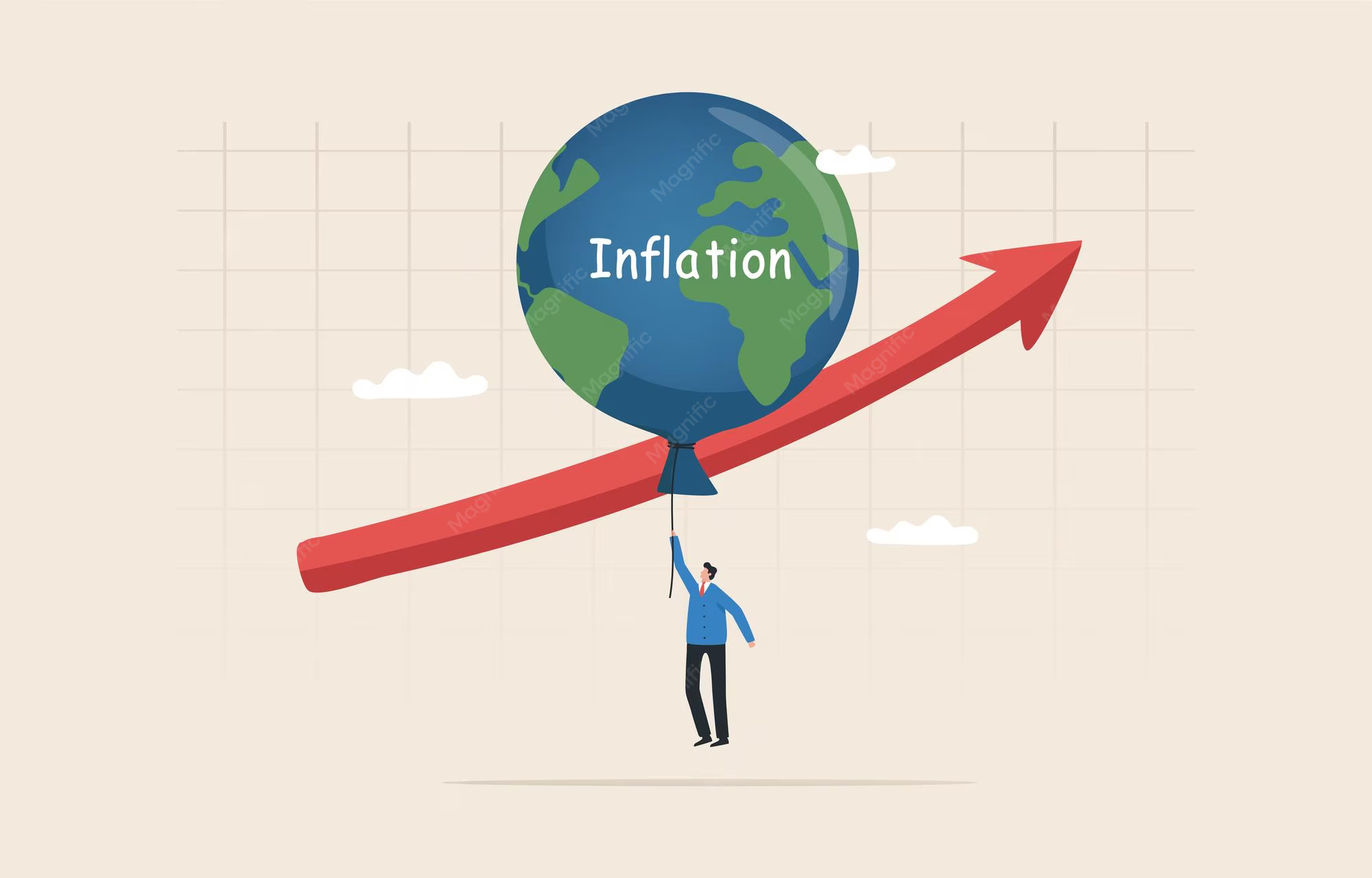
Inflation is often discussed through statistics, central bank announcements, and economic forecasts. For business owners, however, inflation is rarely an abstract concept. It appears in supplier invoices, payroll discussions, transportation expenses, and customer purchasing behavior.
Whether a company operates locally or internationally, prolonged inflation can influence nearly every aspect of its operations. Rising costs affect profitability, while changing consumer priorities create new challenges for growth and planning.
Although inflation presents risks, it also forces businesses to become more efficient, adaptable, and strategic. Understanding its impact is essential for organizations trying to remain competitive in an uncertain economic environment.
Inflation Changes the Cost of Doing Business
One of the most immediate effects of inflation is higher operating costs.
Businesses often face increasing expenses across multiple areas at the same time. Raw materials become more expensive, transportation costs rise, and service providers adjust their pricing to reflect broader economic conditions.
When these increases occur simultaneously, maintaining profit margins becomes significantly more difficult.
| Cost Area | Common Impact on Businesses |
|---|---|
| Raw Materials | Higher production expenses |
| Transportation | Increased logistics costs |
| Utilities | Rising operating overhead |
| Technology Services | More expensive software and subscriptions |
| Professional Services | Higher consulting and support fees |
For many companies, the challenge is not a single price increase but the cumulative effect of multiple cost pressures arriving together.
Pricing Decisions Become More Complicated
Passing higher costs directly to customers is not always straightforward.
Businesses must balance profitability with competitiveness. Increasing prices too aggressively may reduce demand, while absorbing all additional costs can weaken financial performance.
This creates a difficult decision-making environment where companies must continuously evaluate market conditions and customer expectations.
Organizations that understand their value proposition often navigate inflation more effectively because customers are more willing to accept price adjustments when they clearly understand the benefits being offered.
In highly competitive industries, however, pricing flexibility can be limited, making efficiency improvements increasingly important.
Consumer Spending Habits Begin to Shift
Inflation affects customers as much as it affects businesses.
When households face higher costs for essentials such as housing, food, transportation, and utilities, discretionary spending often receives greater scrutiny.
Consumers may delay purchases, seek lower-cost alternatives, or reduce spending altogether.
For businesses, this means demand can become less predictable.
Some industries experience slower sales growth during inflationary periods, while others benefit from customers prioritizing practical products and services over nonessential purchases.
Understanding changing customer behavior becomes critical for maintaining revenue stability.
Hiring and Workforce Planning Require Greater Attention
Labor costs frequently rise during periods of sustained inflation.
Employees often expect compensation adjustments to help offset increasing living expenses. At the same time, businesses may face competition for skilled workers, particularly in industries experiencing talent shortages.
The result is a more complex workforce environment.
| Workforce Challenge | Potential Business Impact |
|---|---|
| Wage Pressure | Increased payroll expenses |
| Talent Competition | Higher recruitment costs |
| Employee Retention | Greater focus on workplace benefits |
| Skills Development | Increased training investment |
| Productivity Goals | Need for greater operational efficiency |
Many organizations respond by investing more heavily in employee development, retention programs, and productivity-enhancing technologies.
Investment Decisions Become More Strategic
Inflation often changes how businesses approach investment.
During periods of economic uncertainty, companies may become more selective about expansion plans, capital expenditures, and large-scale projects.
Rather than pursuing aggressive growth, leadership teams often focus on initiatives that improve efficiency, strengthen resilience, or generate measurable returns.
This does not necessarily mean investment declines. Instead, priorities tend to shift.
Businesses frequently place greater emphasis on automation, process improvement, digital transformation, and supply chain optimization when inflation pressures increase.
Supply Chain Management Gains Importance
Recent years have highlighted the importance of resilient supply chains.
Inflation can amplify existing supply chain challenges by increasing transportation costs, material expenses, and inventory management risks.
As a result, many organizations are reevaluating supplier relationships and sourcing strategies.
Some companies seek greater diversification, while others prioritize reliability over the lowest possible cost.
The goal is no longer simply reducing expenses. It is ensuring consistent access to products, materials, and services necessary for ongoing operations.
Technology Becomes a Competitive Advantage
One of the most significant business responses to inflation is increased interest in technology-driven efficiency.
Organizations are looking for ways to accomplish more with existing resources. Automation, artificial intelligence, data analytics, and digital workflows often become attractive investments because they can help reduce operational friction.
Technology is increasingly viewed not only as a growth tool but also as a cost-management strategy.
Businesses that successfully improve productivity may be better positioned to absorb inflationary pressures without compromising customer experience or profitability.
Not Every Business Experiences Inflation the Same Way
The impact of inflation varies significantly across industries.
Some sectors can adjust pricing relatively quickly, while others operate under long-term contracts or face intense competitive pressure.
| Business Type | Typical Inflation Response |
|---|---|
| Retail | Pricing adjustments and inventory optimization |
| Manufacturing | Cost control and supply chain management |
| Technology | Productivity improvements and automation |
| Professional Services | Fee adjustments and operational efficiency |
| Hospitality | Balancing service quality with rising expenses |
Because industry conditions differ, successful strategies often depend on understanding specific market dynamics rather than applying a universal approach.
Finding Opportunities During Inflation
Although inflation creates challenges, it can also reveal opportunities.
Periods of economic pressure often encourage innovation. Businesses become more disciplined in resource allocation, more focused on customer value, and more willing to modernize outdated processes.
Organizations that adapt quickly may emerge stronger than competitors who rely solely on short-term cost reductions.
Innovation, operational efficiency, and customer trust frequently become valuable advantages during inflationary periods.
In many cases, businesses that build resilience during difficult economic conditions are better prepared for future growth when market conditions improve.
Final Analysis
Global inflation affects businesses far beyond rising prices. It influences workforce planning, investment decisions, customer behavior, supply chain management, and long-term strategy.
While inflation introduces uncertainty, it also encourages businesses to rethink operations, improve efficiency, and strengthen resilience. Companies that remain adaptable and focused on value creation are often better positioned to navigate economic volatility.
The most successful organizations are not necessarily those that avoid inflation’s effects, but those that respond thoughtfully and strategically as conditions evolve.
Frequently Asked Questions
What is inflation in business terms?
Inflation refers to a general increase in prices over time, which raises the cost of goods, services, labor, and business operations.
How does inflation affect company profits?
Inflation can reduce profit margins if operating costs rise faster than revenue or if businesses cannot adjust pricing effectively.
Why do businesses invest in technology during inflation?
Technology can improve efficiency, reduce operational costs, and help organizations maintain productivity despite rising expenses.
Can inflation create business opportunities?
Yes. Inflation often encourages innovation, efficiency improvements, and strategic decision-making that can strengthen long-term competitiveness.
✔ Related Articles
✔ Global Inflation Trends Explained
✔ Biggest Economic Stories This Year
✔ Future Predictions for the Global Economy
✔ Top Financial Challenges in 2026
